
What are Blue Zones?
Blue Zones refer to geographical areas where people demonstrably live longer and healthier lives than average. These regions have a high number of centenarians, and chronic diseases such as cardiovascular disease, diabetes, and dementia are relatively rare.
People in Blue Zones therefore not only live longer but also age healthily.
Discovery of the Blue Zones?
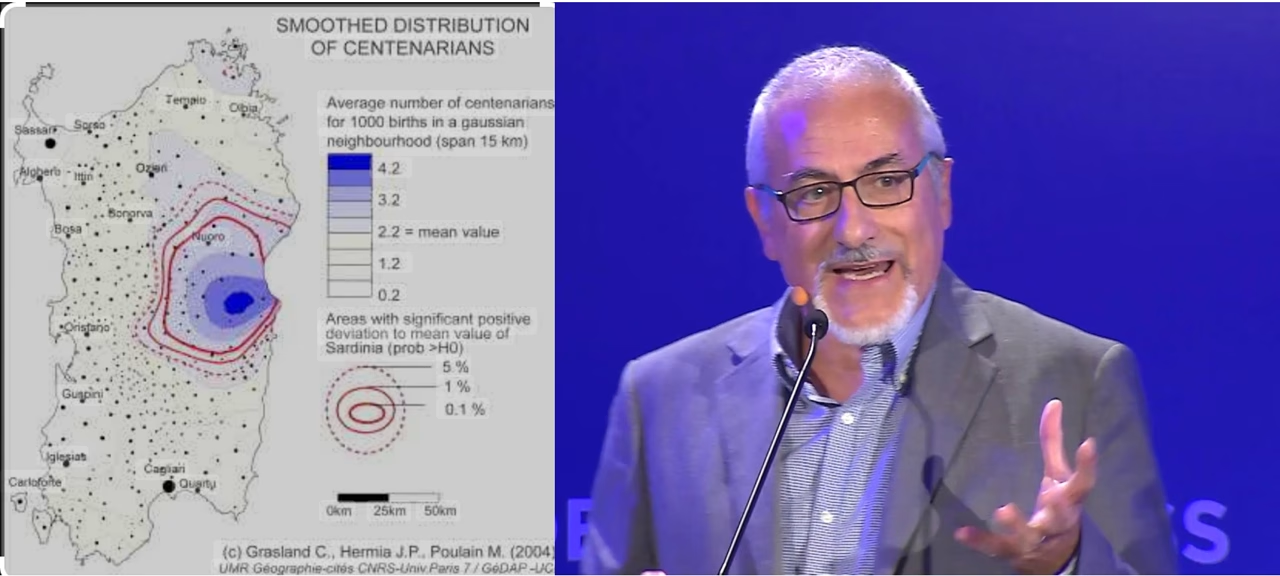
The concept of Blue Zones originated in the late 1990s when Italian physician Gianni Gianni Pes and Belgian demographer Michel Poulain conducted research into the exceptionally long lifespan in Sardinia.
They discovered that a remarkably high number of residents, particularly in the mountain region of Ogliastra , lived to be over 100 years old. During presentations, they marked this area on maps with a blue marker. This gave rise to the name Blue Zone.
Their findings attracted international attention and formed the basis for further research into factors that contribute to a long and vital life.
National Geographic and Dan Buettner
In 2004, journalist and researcher Dan Buettner, inspired by the findings of Gianni Pes and Michel Poulain, joined a multidisciplinary team of scientists in search of other regions with a remarkably high life expectancy.
This international study led to the identification of five regions where people live significantly longer and healthier lives:
- Sardinia (Italy)
- Okinawa (Japan)
- Nicoya (Costa Rica)
- Ikaria (Greece)
- Loma Linda (California, United States)
Buettner described his findings in the influential National Geographic article “The Secrets of Living Longer” (2005).
The article received a great deal of attention worldwide and made the concept of the Blue Zones very well known in a short time.

Lifestyle Characteristics of Blue Zones?
Although the culture and environment of the Blue Zones differ significantly, there are striking similarities in lifestyle.
We work with the six key lifestyle characteristics:
- Residents have a clear sense of purpose or meaning in life
- Residents eat primarily unprocessed and largely plant-based food
- Residents have effective ways to reduce stress
- Regular exercise is a natural part of daily life
- Strong social networks and a sense of community exist
- Residents have a positive attitude towards life and regularly reflect on what they are grateful for
Scientific Interest and Discussion
Since the first publications, the number of scientific studies on Blue Zones has increased significantly. By now, more than one hundred scientific publications have appeared on this subject.
Some researchers raise concerns regarding Buettner’s research. They point out, among other things, possible limitations in historical population data, meaning that the exact life expectancy in some Blue Zones remains a subject of debate. Although Buettner’s original research is sometimes disputed, this does not apply to the identified lifestyle characteristics for a vital and long life. These are widely supported by scientific research, and new studies appear daily that further substantiate these insights.
For instance, an increasing number of scientists point to the importance of regular, moderate-intensity exercise for a vital life. Evidence is also mounting regarding the health benefits of unprocessed and plant-based foods.
The same applies to regular moments of recovery and relaxation during the (work)day and effective ways to reduce stress.
In addition, it is now generally accepted that social connectedness and a sense of community have a significant influence on health and vitality. While this was still an eye-opener in 2004, it is now clear that loneliness can have major consequences for health.
The importance of a sense of purpose is also increasingly being scientifically confirmed. People who know what they get up for in the morning get sick less often on average and recover faster when they do get sick.
Applicability
We have translated these scientifically substantiated lifestyle characteristics from the Blue Zones into six vitality insights.
This makes the principles of the Blue Zones applicable in daily life — even if you do not live in a Blue Zone.
With these insights, we aim to inspire as many people as possible to live a more vital life. We do this with a wide range of propositions for both organizations and individuals.
Read and watch more
- Buettner, D. (2005). The Secrets of Living Longer. National Geographic.
- Buettner, D. (2016). Lessons from the Blue Zones.
- Also watch the Netflix documentary Live to 100: Secrets of the Blue Zones